Greening business parks stalls due to regulations and lack of space |
|
|
|
|
 |
| 104 sec |
Koninklijke VHG: 'The value of green is clear, but companies can hardly move forward'
More and more companies want to green their premises, but implementation is stalling. That is what Marc van Rosmalen, director of Koninklijke VHG and board member of the Werklandschappen](https://www.werklandschappen.nl/over-het-programma/]Werklandschappen) van de Toekomst Foundation, observes. He says the benefits of green are widely recognised. 'Green benefits nature, climate, people and the economy. But on business parks, that knowledge does not automatically lead to action.'
| Image for illustration: green façade in Barcelona, photo taken during Husqvarna Living City 2025 |
The Netherlands has almost 3,800 business parks, together roughly the size of the Veluwe. Yet only one percent is designed with green or blue elements. This makes these areas vulnerable to heat, drought and flooding. 'A third of the Dutch population works on a business park. These sites must be made future-proof,' says Van Rosmalen.
Permit requirements and limited space
Many entrepreneurs run into regulations, such as mandatory parking space requirements. As a result, green plans often cannot proceed. Expansion or redesign is also difficult due to limited space. There is a lack of central direction, and companies struggle to distribute investments and returns fairly. Van Rosmalen: 'There are plenty of innovations, but practical application lags behind.'
He sees a clear role for municipalities and provinces, which set permit conditions and design requirements for business parks. 'If those frameworks change, space for greening will follow.'
|
|
Many entrepreneurs run into regulations, such as mandatory parking space requirements. As a result, green plans often cannot proceed
| |
|
Examples call for policy translation
Some companies are already taking steps. Companies like FLEX green their sites wherever possible. Green contractors, including Jonkers Groen, also report growing demand for green roofs, retention roofs and other nature-inclusive measures. But according to Van Rosmalen, the scale is still too small to meet national goals. 'Progress requires policy that aligns with what entrepreneurs want to do.'
|
|
Green must be included from the earliest planning phase. This requires cooperation between government, businesses and professionals
| |
|
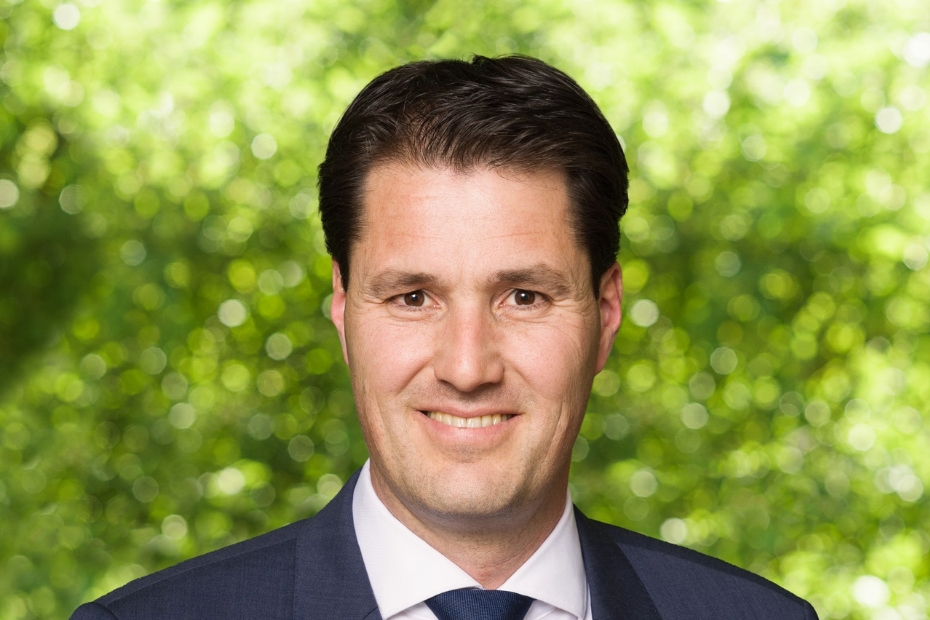 | | Marc van Rosmalen |
|
|
Significance for the sector
Due to the growing need for climate adaptation, green professionals are becoming increasingly important, says Van Rosmalen. 'Green must be included from the earliest planning phase. This requires cooperation between government, businesses and professionals. Without acceleration, business parks will remain vulnerable to extreme weather. That affects both companies and employees. The value of green is clear. The challenge now is ensuring companies can actually make use of that value.'
What is Werklandschappen van de Toekomst?
Werklandschappen van de Toekomst is a programme that supports companies and governments in greening business parks. It focuses on water storage, heat resilience, biodiversity and a healthy working environment.
The aim is for at least 1,000 sites to have taken steps toward a future-proof work landscape by 2032. The initiative was launched by IVN Nature Education and is supported by the National Growth Fund.
|
|
|
Without acceleration, business parks will remain vulnerable to extreme weather. That affects both companies and employees
| |
|
This article was first published on 27 November 2025 on the website](https://www.stad-en-groen.nl/article/52145/vergroening-bedrijventerreinen-hapert-door-regels-en-ruimtegebrek]website) of Stad + Groen.
| LOG IN
with your email address to respond.
|
|
|
| There are no comments yet. |
|
| |
Anyone can place small ads for free through their own account.
Place a free ad
|
|
|
|