European nature restoration rules require municipalities to change how they work |
|
|
|
|
 |
| 211 sec |
Sweco sees Nature Restoration Regulation as an opportunity to embed green infrastructure more firmly in policy, design and management
The European Nature Restoration Regulation (NRR) is raising many questions among municipalities. A webinar by Sweco on the impact of the new rules attracted 340 participants representing more than 140 municipalities. According to urban greening expert Joeri Meliefste and environmental consultant Roel Janmaat of Sweco, the biggest change lies not only in the requirements themselves, but mainly in how municipalities approach green infrastructure. 'It will no longer be optional. Green infrastructure will have to be a demonstrable part of the decision-making process.'
| Credits: Jesse van Zanten (Sweco) |
The Nature Restoration Regulation does not only concern natural areas outside cities. Urban green infrastructure also falls under the European rules. Articles 8 and 10 are particularly important for municipalities. Article 8 concerns the restoration of urban ecosystems, with a focus on green space and tree canopy cover, among other things. Article 10 focuses on restoring pollinator populations. Municipalities will ultimately have to demonstrate that green infrastructure is no longer declining and begins to increase from 2031 onwards.
According to Meliefste, municipalities say that much is still unclear. 'Many municipalities are asking themselves: what exactly is coming our way? At the same time, we already know the main message: make sure you reverse the negative trend of declining green space, vegetation layers and tree canopy cover, along with the negative consequences for pollinator populations.'
|
|
'Municipalities say that much is still unclear'
| |
|
From ambition to obligation
Many municipalities are already working on greening, but according to Sweco, the link between policy and implementation is often missing. 'Many policy documents clearly describe the ambitions. The question is: how do you translate them throughout the organisation, into projects and management, so that an ambition can actually become reality?' says Roel Janmaat.
According to Sweco, the NRR requires greater insight. Municipalities need to monitor changes in green space and tree canopy cover, for example, while also considering strategies for tree felling, area development and privately owned green spaces.
The latter is an important issue, according to Meliefste. 'When municipalities think about green infrastructure, they often focus mainly on public space. But private gardens are also part of urban green infrastructure, as stated in the NRR. That offers an enormous opportunity, but also presents a challenge.'
|
|
'Private gardens are also part of urban green infrastructure. That offers an enormous opportunity, but also presents a challenge'
| |
|
Green infrastructure must have a seat at the table
According to Janmaat, an important change is that green infrastructure can no longer be treated solely as a matter for the green management department. 'A municipality consists of many separate departments: social affairs, the physical environment, mobility, energy and housing. Everyone needs space, but that same space is often allocated several times over.'
He says the NRR requires an even more integrated approach. Major replacement projects in particular offer opportunities. 'When a street has to be opened up for cables, sewer systems or redesign work, all disciplines should look at it together: what can we achieve here? After all, social benefits are also created within the physical living environment.'
According to Sweco, the new rules may also provide an incentive to strengthen green infrastructure through a municipal green standard. The consultancy firm sees the NRR as an opportunity to give green infrastructure a firmer place within the instruments of the Environment and Planning Act and municipal decision-making.
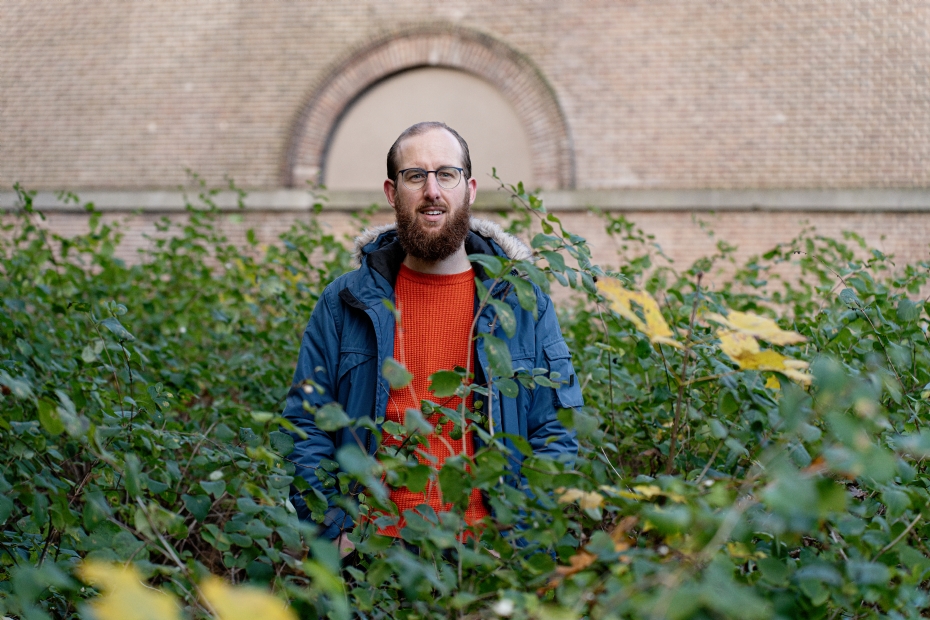 | | Joeri Meliefste - Sweco |
|
|
|
|
'Green infrastructure can no longer be treated solely as a matter for the green management department'
| |
|
Management requires different choices
It is not only the design of public space that will change. Management is also coming more clearly into focus. Article 10 of the NRR calls for attention to pollinators such as bees, hoverflies, butterflies and other insects. This has direct consequences for how green spaces are designed and maintained. 'For years, much of our green infrastructure has been designed around efficient management,' says Meliefste. 'That often means large planting areas containing the same species because they are easy to maintain. But biodiversity requires variation, both in species and in height, among other things.'
According to him, this is not only about using more plants, but mainly about choosing the right plants. 'We need to pay more attention to native species and to the relationship between plants and animals. A plant that flowers beautifully is not automatically valuable to pollinators.'
The discussion around trees also requires a nuanced approach. 'There is a lot of talk about planting trees. That is important, but pollinators do not only need trees. They mainly need flowers, herbs and shrubs. It is the combination that matters.'
|
|
'The rules are not yet clear on every point, but the direction is: green infrastructure must become a fully integrated part of how we develop our cities'
| |
|
More measurement, less guesswork
Monitoring is another area of concern. According to Sweco, many municipalities still have insufficient insight into exactly how much green space is disappearing or being added. 'Municipalities often have a good understanding of what is being added, but less insight into what is disappearing elsewhere,' says Meliefste.
The NRR therefore requires a different way of looking at green infrastructure: not only as a cost item or an area to maintain, but as part of climate policy, public health and quality of life.
According to Sweco, this also creates an opportunity. Green infrastructure can contribute to several societal goals at once, including cooling, health and biodiversity. But municipalities will need to make choices. 'You cannot do everything everywhere. Sometimes you have to determine the most important functions for each area and prioritise accordingly. A paved location beside a busy road may require a different solution from a quiet residential street. It is not about using the same approach everywhere, but about making deliberate choices.'
Over the coming year, the Dutch government will further develop how the NRR will be implemented in the Netherlands. The draft nature restoration plan will be submitted to the European Union in September 2026 and will be finalised in September 2027. According to Sweco, this does not mean that waiting is an option. 'The rules are not yet clear on every point,' says Meliefste. 'But the direction is clear. Green infrastructure must become a fully integrated part of how we develop our cities, with preservation as the central principle.'
|
|
'Municipalities often have a good understanding of what is being added, but less insight into what is disappearing elsewhere'
| |
|
 | | Roel Janmaat - Sweco |
|
|
This article was previously published on 20 July 2026 on the website of Stad + Groen.
| LOG IN
with your email address to respond.
|
|
|
| There are no comments yet. |
|
| |
Anyone can place small ads for free through their own account.
Place a free ad
|
|
|
|








