Drought costs cities money, but no one knows how much |
|
|
|
|
 |
| 147 sec |
Researchers identify major knowledge gap around damage to urban green, infrastructure and living environments
How much damage does drought cause in a city? There is surprisingly little information available to answer that question. While municipalities invest in climate adaptation, greening and water storage, there is still no clear picture of the economic and social consequences of drought in urban areas. Researchers from Vrije Universiteit Amsterdam describe this as an important knowledge gap.
| Ground subsidence caused by drought and low groundwater levels, image for illustration purposes |
Drought is often viewed from an agricultural perspective. In that sector, yield losses are relatively easy to identify and measure. Much less is known about the consequences for cities. According to researchers, the lack of knowledge concerns not only direct damage, but also the wider effects that drought can trigger.
The problem is not only about dry trees
Drought affects much more than urban greenery alone. Long-term water shortages can lead to weakened trees, higher maintenance costs, water quality problems and damage to infrastructure. Effects can also reinforce each other. Researchers refer to these as cascade effects: a chain of consequences that follow and strengthen one another.
For example, a weakened tree structure can result in less shade and more heat stress in neighbourhoods. Lower groundwater levels can cause subsidence and damage to infrastructure. Such effects are usually recorded separately, making it difficult to create an overall picture.
|
|
Drought affects much more than urban greenery alone
| |
|
A blind spot for municipalities
This lack of insight makes it difficult to weigh up investments. Municipalities are spending increasing amounts on climate-adaptive measures, but often cannot clearly demonstrate what damage these measures prevent.
According to the researchers, more knowledge is needed about both economic damage and non-economic impacts. These include loss of biodiversity, reduced quality of life, lower recreational value of green spaces and effects on health and wellbeing. Such consequences are difficult to express financially, but can have a major social impact.
|
|
We know a lot about drought damage in rural areas, but much less about drought damage in cities
| |
|
Drought is becoming an urban challenge
The call for more knowledge comes at a time when drought is increasingly seen as one of the biggest climate risks for the Netherlands. International research shows that the economic and social costs of drought continue to rise and that the effects extend far beyond agriculture and nature.
For municipalities, this creates an important challenge. Making cities more resilient to drought requires not only more greenery and water storage, but also better insight into the damage caused by drought and the costs that can be avoided.
|
|
If we cannot measure the damage, it is difficult to determine which measures deliver the greatest benefits
| |
|
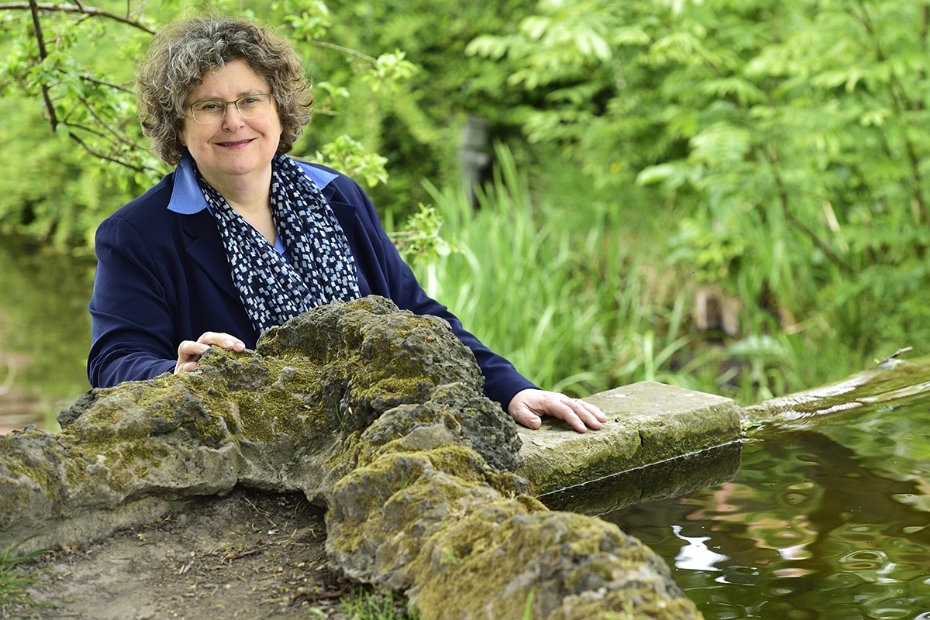 | | Hilde Niezen, managing director of Stichting RIONED (Image via: RIONED) |
|
|
Municipalities see the problem growing
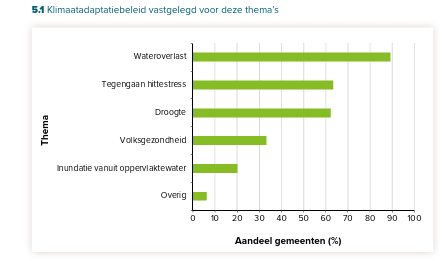
That drought is becoming increasingly important for municipalities is also shown by figures from Stichting RIONED. According to managing director Hilde Niezen, 62 percent of municipalities have now developed drought policies as part of their climate adaptation approach. More and more infiltration facilities are also being installed to retain rainwater and strengthen the sponge effect of the soil. More than 2,500 of these facilities are now located throughout the Netherlands.
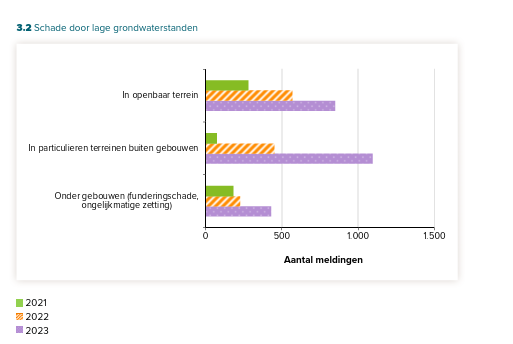
The number of reports of damage caused by low groundwater levels is also increasing (see graph). According to Niezen, it is not possible to determine whether this rise is caused by more damage or by greater awareness among residents and municipalities.
The combination is striking: municipalities are investing more and more in measures against drought and are also recording more damage, but the amount of damage these measures actually prevent remains largely unknown.
|
Drought higher on the municipal agenda
Graph 1: Number of reports of damage caused by low groundwater levels tripled between 2021 and 2023. Source: Monitor municipal water management tasks, Stichting RIONED
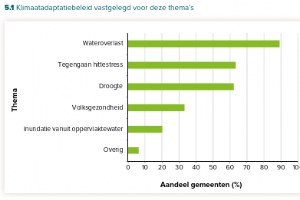
Graph 2: 62 percent of municipalities have developed policies to combat drought. Source: Monitor municipal water management tasks, Stichting RIONED
|
What we do know: foundation damage costs tens of billions
For foundation damage, there is already a much clearer picture of the scale of the problem than for other forms of drought damage. According to the Council for the Environment and Infrastructure (Rli), around 425,000 buildings are currently dealing with or will soon face foundation problems. The total repair task is estimated at approximately 54 billion euros.
According to the Rli, climate change and low groundwater levels are turning the issue into a social challenge that extends beyond individual property owners. Foundation damage also affects public space, infrastructure and the liveability of neighbourhoods. This makes foundation damage an example of the wider social costs of drought that, according to researchers from Vrije Universiteit Amsterdam, largely remain out of sight.
Read the report 'Goed gefundeerd: advice for a national approach to foundation problems' (February 2024).
|
This article was previously published on 8 July 2026 on the website of Stad + Groen.
| Vrije Universiteit Amster... | |
| |
| LOG IN
with your email address to respond.
|
|
|
| There are no comments yet. |
|
| |
Anyone can place small ads for free through their own account.
Place a free ad
|
|
|
|