Hydraulic oil kills the grass, not the heat |
|
| GARDEN AND PARK TECHNOLOGY |
|
|
|
|
 |
| 111 sec |
US research debunks myths about hydraulic oil leaks on turf
When a hydraulic hose bursts on a putting green, the first reaction is often to flood the area with water. Or use dish soap. According to GCSAA researcher William Berndt, these common responses can actually make the damage worse. After fifteen years of research, he concludes that it is not the temperature of the oil, but the hydraulic oil itself that causes the grass to die. Moreover, an oil leak is not only a problem for playing quality, but also for the soil.
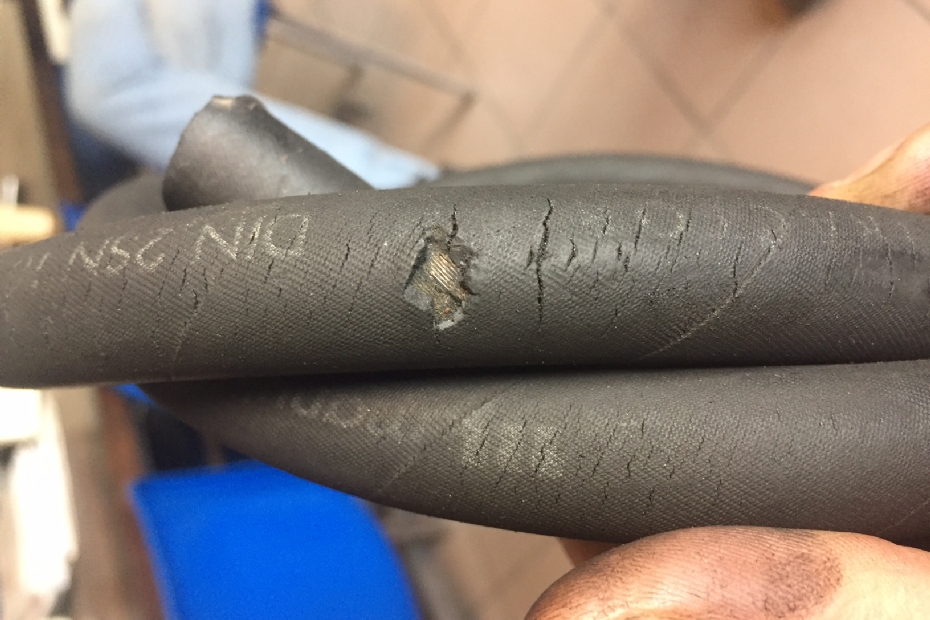 |
Hydraulic leaks are among the most feared incidents on a golf course. Especially on putting greens, even a relatively small amount of oil can cause long-lasting damage. According to Berndt, however, there are still many misconceptions about the cause of this damage. A common explanation is that the hot oil burns the grass. Several field trials have shown, however, that both cold and hot hydraulic oil cause equally severe damage. Heat only accelerates the initial burn where the oil comes into contact with the plant. The lasting damage occurs because the oil subsequently spreads through the thatch layer and into the soil, where it proves toxic to the turfgrass.
Water offers little help
The most commonly used emergency measures also appear to be largely ineffective. The research shows that flushing an oil spill with water does little to reduce the damage caused by either mineral or vegetable-based hydraulic oil. Because oil floats on water, intensive flushing can actually spread the contamination over a larger area. The same applies to dish soap and detergents. Although they appear to loosen the oil, the researchers found that they mainly cause it to penetrate deeper into the soil or spread even further. As a result, not only does the damage to the turf increase, but so does the risk of soil contamination.
Vegetable-based does not mean harmless
Biodegradable hydraulic oil is not the solution either. In practice, it is often assumed that vegetable-based oil is less harmful to turf, but the research shows that it kills grass just as effectively as conventional mineral hydraulic oil. Synthetic hydraulic fluids perform slightly better. The damaged areas are smaller and recover more quickly, but these fluids still cause significant damage to the turf.
Soil is contaminated as well
One of the key findings of the research is that hydraulic oil does not remain on the surface. Within a day, the oil penetrates several centimetres into the soil and reaches the root zone. As a result, not only are the grass blades affected, but also the roots and soil organisms. According to Berndt, a hydraulic oil leak should therefore be regarded as a form of soil contamination. In the case of larger spills, removing the contaminated turf and part of the underlying soil may be more effective than attempting to wash the oil away.
Prevention remains the best solution
The researcher concludes that there is currently no scientifically proven method to completely limit the damage caused by a hydraulic oil leak. Proper maintenance of hydraulic systems therefore remains the most effective way to prevent problems. In the longer term, fully electric machines may further reduce the risk of hydraulic oil leaks, although the author acknowledges that a complete transition is not yet realistic for many golf courses.
This article was previously published on 29 June 2026 on the Greenkeeper](https://www.greenkeeper.nl/article/54651/hydrauliekolie-doodt-het-gras-niet-de-hitte]Greenkeeper) website.
| LOG IN
with your email address to respond.
|
|
|
| There are no comments yet. |
|
| |
Anyone can place small ads for free through their own account.
Place a free ad
|
|
|
|





