One tray that fits every pot size: yes, it's possible |
|
|
|
|
 |
| 205 sec |
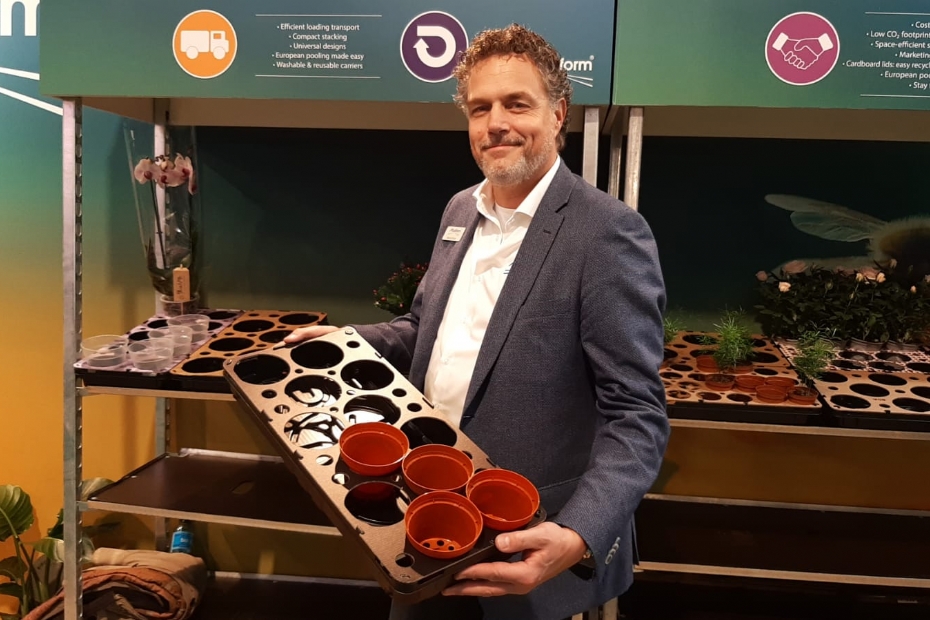
A seemingly simple innovation solves a major logistics pain point in the potted plant sector: stability and compatibility for every pot size, in one tray. Modiform presents a lightweight plastic tray with a cardboard inlay that can be die-cut to size.
 |
Fragmentation in the supply chain calls for a new standard
The rise of reusable packaging in the ornamental horticulture supply chain was inevitable, but what it should look like remained unclear for years. Until now. Modiform, for decades one of the key developers of cultivation and transport solutions, presented a concept that jolted the sector awake: a lightweight plastic tray combined with a cardboard inlay that can be fully die-cut to size. It seems like a small change, but according to Martijn Bruin, strategy & business development manager at Modiform, it goes straight to the heart of what the sector needs. "The basis of any system that works well is standardization," he says. "And that is exactly what has been under pressure in practice for years."
A tray world that kept getting more complex
The variation in pot sizes, taper angles and country-specific standards has only increased over the past decades. Dutch 5° and 8° pots are used alongside Danish and German 7° types, and new deviations keep being added. The Normpack series now includes more than eighty models to keep up with that variety. Modiform sees the impact of this every day. "A pot that doesn't sit quite right in the cup will start moving during transport," says Bruin. "And with tall plants or intensive logistics, you can't afford that. In recent years, the NormPack range has therefore become very complete."
|
|
"The sector needs simplification, not extra pressure"
| |
|
PPWR is pushing the chain into action
Although the search for a more efficient, more sustainable base has been going on for years, new European packaging legislation (PPWR) is accelerating the issue. From 2030, reusable carriers must be used in many B2B flows. In practice that means: fewer models, longer service life and more alignment across the chain. But splitting into dozens of reusable models would only increase complexity. "The sector needs simplification," says Bruin. "Not extra pressure."
The answer: four basic carriers
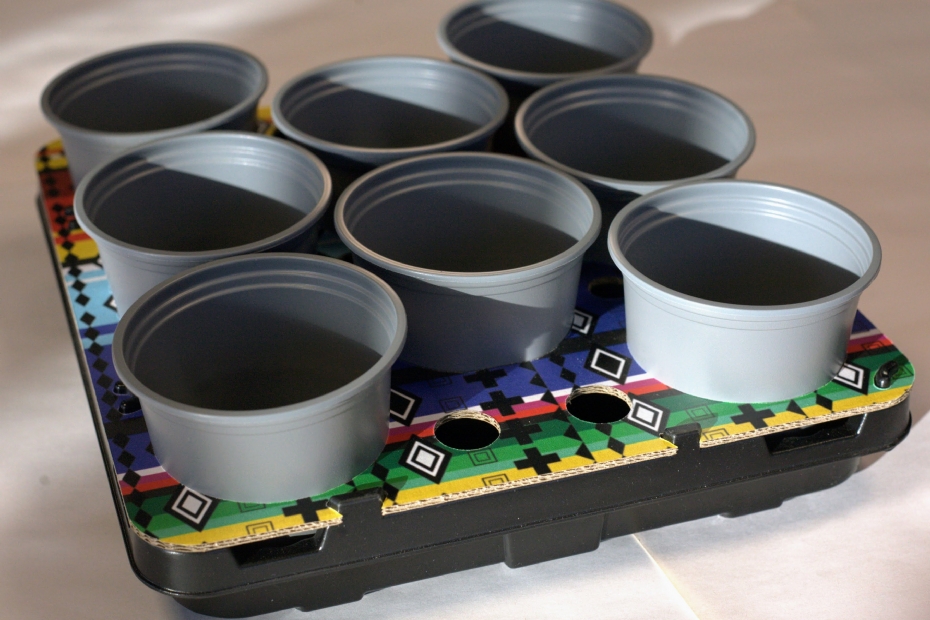
That is why Modiform started, a few years ago, developing a system that can handle both regulations and day-to-day practice: an open plastic carrier tray in four fixed sizes, based on the outer dimensions of Normpack, combined with a cardboard inlay that determines the stability and positioning of the potted plants. The carrier tray itself is deliberately light and flexible; the structural strength only appears once the cardboard is placed on top. According to Bruin, that is the key to the concept: "The cardboard and the tray reinforce each other. On its own, you can twist the tray a bit, but once the inlay is on, it becomes one tray, stiff as a board. We put that principle at the center from day one at Modiform."
 | | Filled colourful tray |
|
|
What it means for growers: calm, flexibility and a low entry barrier
For growers, this mainly means calm and predictability. With one base tray, countless configurations become possible without having to purchase a whole range of tray models. That saves storage space and reduces switching stress when a retailer moves to a different pot size or configuration. "Growers no longer have to switch to a different model per customer," says Bruin. "The tray stays the same; only the cardboard changes."
A supply chain that adapts gradually
Single-use will also not disappear overnight. According to Bruin, there will still be room for certain exceptions even after 2030. "It's not a hard cut," he says. "During the transition period, both systems will exist side by side. But from 2027, at Modiform we do expect more and more parts of the chain to move towards multiple-use. The direction is clear: this will be the new norm."
Room for presentation, communication and customization
The cardboard inlays are also easy and affordable to produce. They can be printed in the grower's or retailer's house style, giving the system a communication function as well. This opens up new options for brand presentation, seasonal campaigns or product branding. The fact that the cardboard can be recycled after use through regular paper and cardboard collection makes the whole system not only practical, but also solid from a sustainability perspective.
Ready for existing logistics
The system fits fully within existing logistics infrastructure. The carrier trays have the same outer dimensions as current trays and fit on Danish trolleys and other common logistics carriers. For growers, the working method changes hardly at all; one step is added: placing the cardboard. According to Bruin, that does not have to cause delays. Especially in an automated setup, placing the cardboard is faster than filling the tray.
Trade and retail also see the benefits
For traders and retailers, the system mainly offers clarity. The return flow consists of no more than four tray formats, so interim storage of return packaging in the store takes up minimal space and makes return logistics as simple and efficient as possible. The cardboard stays in the store and goes into existing cardboard collection. With a European recycling rate of more than eighty percent, this aligns with the sustainability targets retailers have increasingly set for themselves.
|
|
"The strength is in the combination of customization and standardization"
| |
|
Developed with the chain, ready for launch
During development, Modiform's R&D team was strongly inspired by a selected number of retailers and exporters from both the supermarket and DIY channels. Because protecting intellectual property was a priority until recently, the system could only be presented publicly for the first time in the recent period. Now the phase starts in which chain partners are brought together and preparations for market introduction are made. Bruin sees that as a natural step: "First we want to build the coalition. Then we will show in practice how it works, from nursery to shop floor."
According to him, Modiform's expectations form the real foundation under this innovation. "This system must bring calm. Fewer models, less stock stress, fewer exceptions. That makes the chain scalable. The strength is in the combination of customization and standardization. If there's one thing we've been waiting for all these years, it's this."
| LOG IN
with your email address to respond.
|
|
|
| There are no comments yet. |
|
| |
Anyone can place small ads for free through their own account.
Place a free ad
|
|
|
|








